

Education Workshop and Courses
Resuscitation Academy Leadership Course
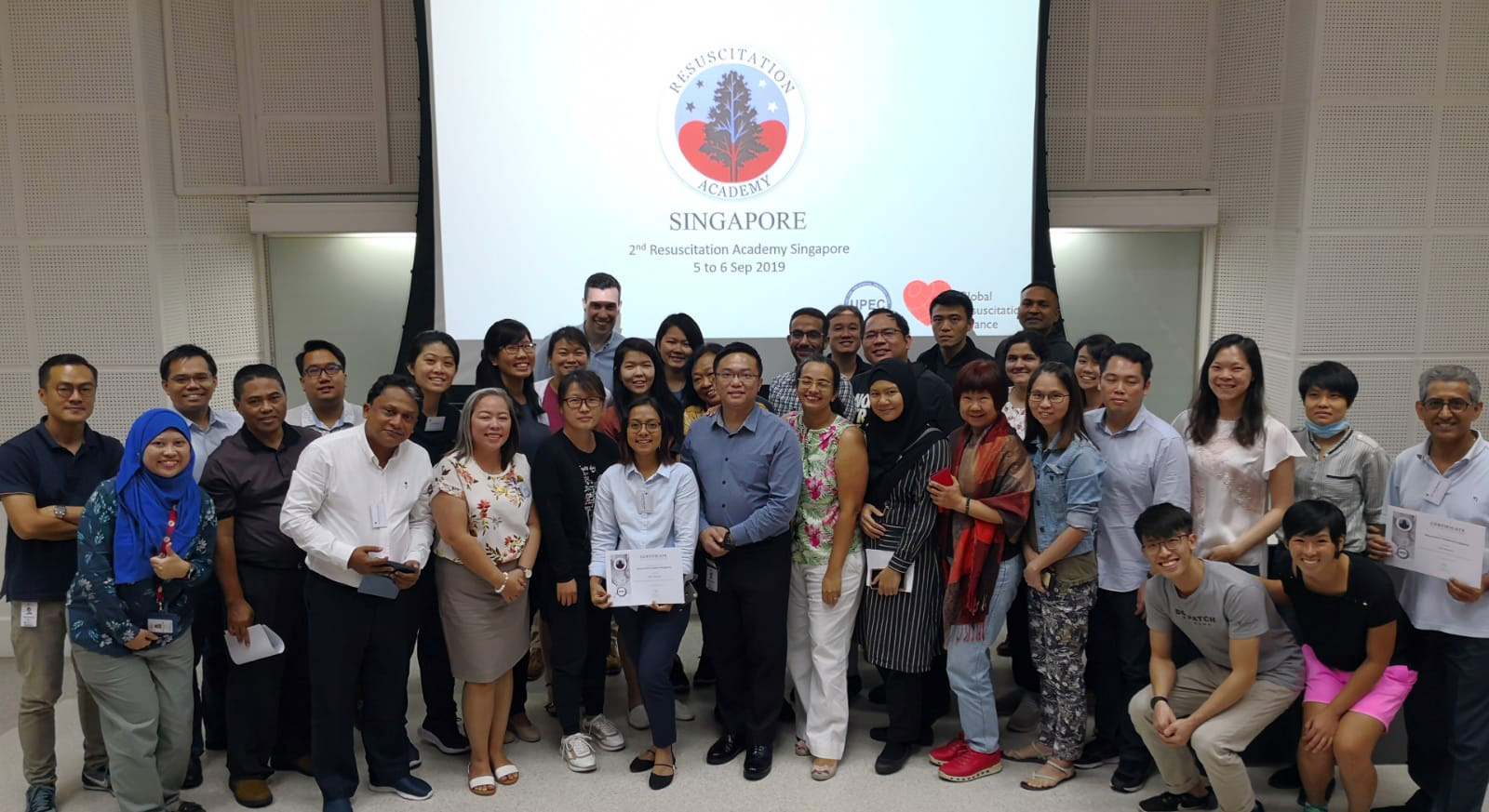
UPEC organised the first Resuscitation Academy Leadership Course in Southeast Asia in 2016. This two-day program introduces EMS leaders to the 10 steps for improving survival rates for cardiac arrest. Participants have the opportunity to learn from renowned faculty with proven expertise in leading successful resuscitation improvement initiatives, network with EMS leaders from global systems, and access comprehensive support materials.
Over the years, our UPEC Resuscitation Academy team has organised both local and international courses, supporting EMS in the region to improve Out-of-Hospital Cardiac Arrest (OHCA) survival rates.
For more details: https://www.resuscitationacademy.org/leadership-workshop
Emergency Medical Services (EMS) Medical Directors Course

The series of Emergency Medical Services (EMS) Medical Directors Courses is the localised version of the NAEMSP Medical Directors Course. It aims to enhance the participants’ expertise in EMS issues. It also provides an overview of elements that run the range and depth of topics vital to EMS.
Originating from the National EMS Medical Directors Course & Practicum by the National Association of EMS Physicians (NAEMSP), the EMS Medical Director course is accredited by the Asia Association in EMS (AAEMS) in Asia.
The EMS Medical Directors Course can be divided into three sub-categories:
-
EMS Medical Directors Course – An entry course for medical directors for both EAS and MTS. A prerequisite for the Advanced EMS Medical Directors Course.
-
Advanced EMS Medical Directors Course – This course provides advanced knowledge for medical directors of EAS.
-
EMS Leadership for SCDF Commanders – With the increasing demand for national EMS, SCDF firemen are cross-trained as EMTs. This course offers SCDF commanders an oversight of EMS.
|
EMS Medical Directors Course |
|
|
Doctor with full registration with SMC |
✓ |
|
Registered nurse with full registration with SNB |
✓ |
|
Paramedic in EMS Management role |
✓ |
|
Current or potential clinical directors of ambulance services |
✓ |
Since the COVID-19 pandemic, UPEC has organised a hybrid version of the Basic & Advanced combined course, which includes e-learning and physical sessions.
NAEMT Courses

Various courses developed by NAEMT were introduced to enhance the knowledge of our pre-hospital providers. The NAEMT Courses in Singapore are coordinated by the Trauma Training Centre, TTSH (for trauma courses) and UPEC (for all other courses) in Singapore. UPEC members are also part of the PHTLS core faculty.
For more information about NAEMT and courses not offered in Singapore, please visit the NAEMT website.

|
Pre-Hospital Trauma Life Support (PHTLS) |
|
|---|---|---|
|
Pre-hospital Trauma Life Support (PHTLS) is recognised around the world as the leading continuing education program for pre-hospital emergency trauma care. NAEMT developed PHTLS in cooperation with the American College of Surgeons’ Committee on Trauma and has been led by the National Trauma Committee in Singapore since 2013. It is currently provided in two training centres in Singapore. NAEMT Authorised Training Centres for PHTLS: |
||
|
PHTLS for First Responders (PHTLS FR) |
||
|
PHTLS for First Responders (PHTLS FR) adapts the world-class trauma care content from the 9th edition of PHTLS and delivers it in a style that is relevant to and accessible by first responders and EMTs. Authorised Training Centres for PHTLS FR: |
||

|
Advanced Medical Life Support (AMLS) |
|
|
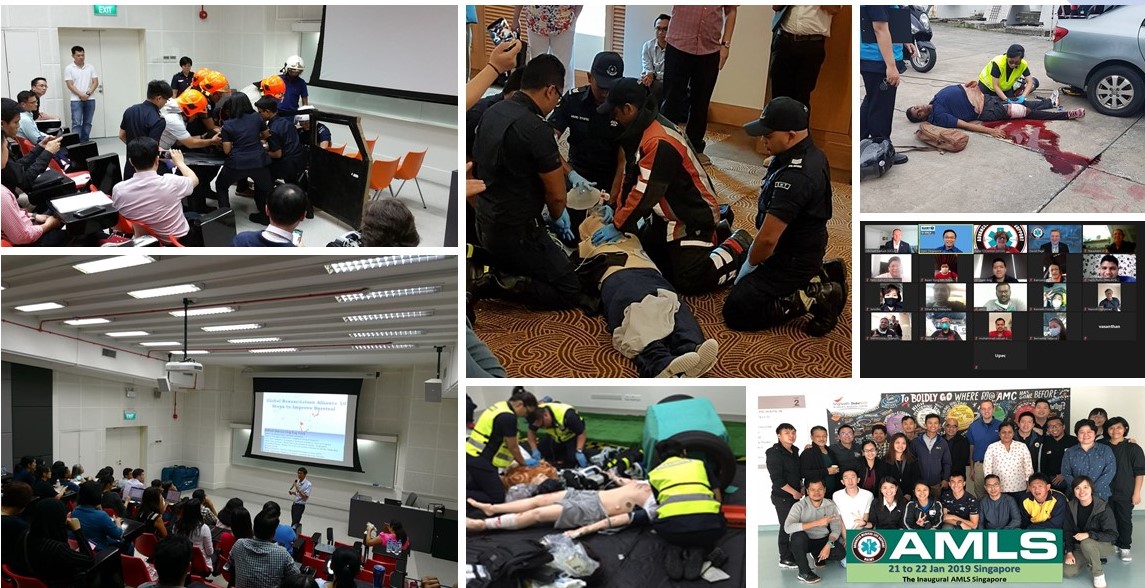
Advanced Medical Life Support (AMLS) remains the gold standard of education for emergency medical assessment and treatment. AMLS emphasises the use of the AMLS Assessment Pathway, a systematic tool for assessing and managing common medical conditions with urgent accuracy. The course is endorsed by the National Association of EMS Physicians and was brought into Singapore by UPEC in 2019. Authorised Training Centres for AMLS: |
||


|
Tactical Combat Casualty Care (TCCC) / Tactical Emergency Casualty Care (TECC) |
|
|
Tactical Combat Casualty Care (TCCC) was developed by the U.S. Department of Defense and the Joint Trauma System of the Defense Health Agency (DHA) to teach evidence-based, life-saving techniques and strategies to provide the best trauma care on the battlefield. The Tactical Emergency Casualty Care (TECC) course teaches EMS practitioners and other pre-hospital providers how to respond to and care for patients in a civilian tactical environment. Authorised Training Centres for TCCC & TECC: |
||

|
Geriatric Education for EMS (GEMS) |
|
|
Advanced Medical Life Support (AMLS) remains the gold standard of education for emergency medical assessment and treatment. AMLS emphasizes the use of the AMLS Assessment Pathway, a systematic tool for assessing and managing common medical conditions with urgent accuracy. The course is endorsed by the National Association of EMS Physicians and brought into Singapore by UPEC in 2019. Authorised Training Centres for GEMS: |
||
Life Support Courses
Targeted Temperature Management (TTM) Provider Course

TTM was strongly recommended by ILCOR (2015) and NRC (2016) as a component of post-resuscitation care. It has been known to be effective in improving the survival rate and neurological function outcome of patients after cardiac arrest.
This course provides local providers with in-depth knowledge to manage patients on TTM. The course was organised by the National TTM Workgroup. For more information on this national workgroup, please click here.
Content
-
Latest update of post-resuscitation care & TTM evidence and trial.
-
Singapore Guideline on TTM
-
Breaking the barriers to the implementation of TTM
-
Pharmacological consideration
-
Complications and side effects
-
Cardiovascular and Neurological management
-
Simulation training for TTM
-
Showcase of various TTM methods and equipment.
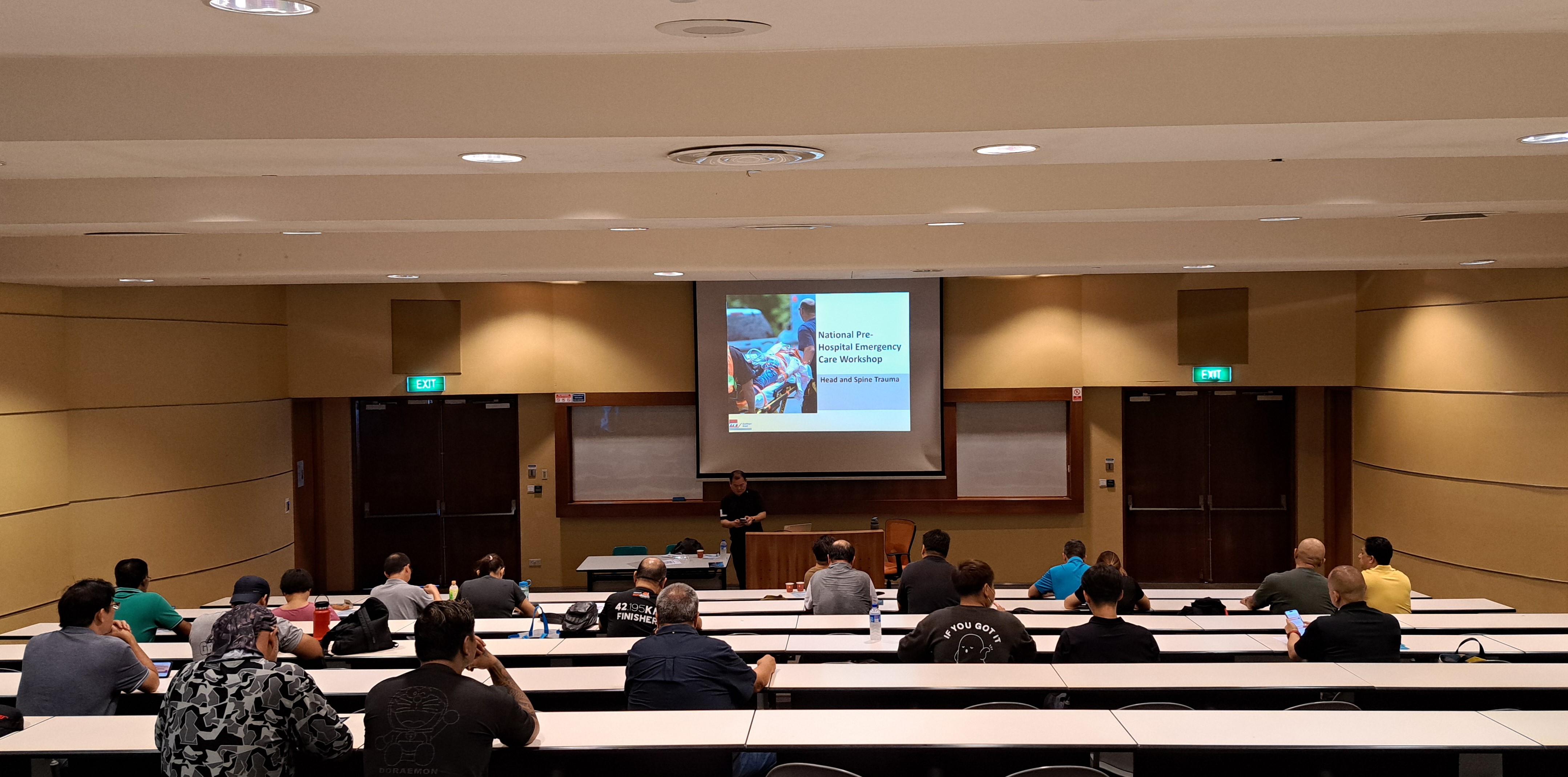
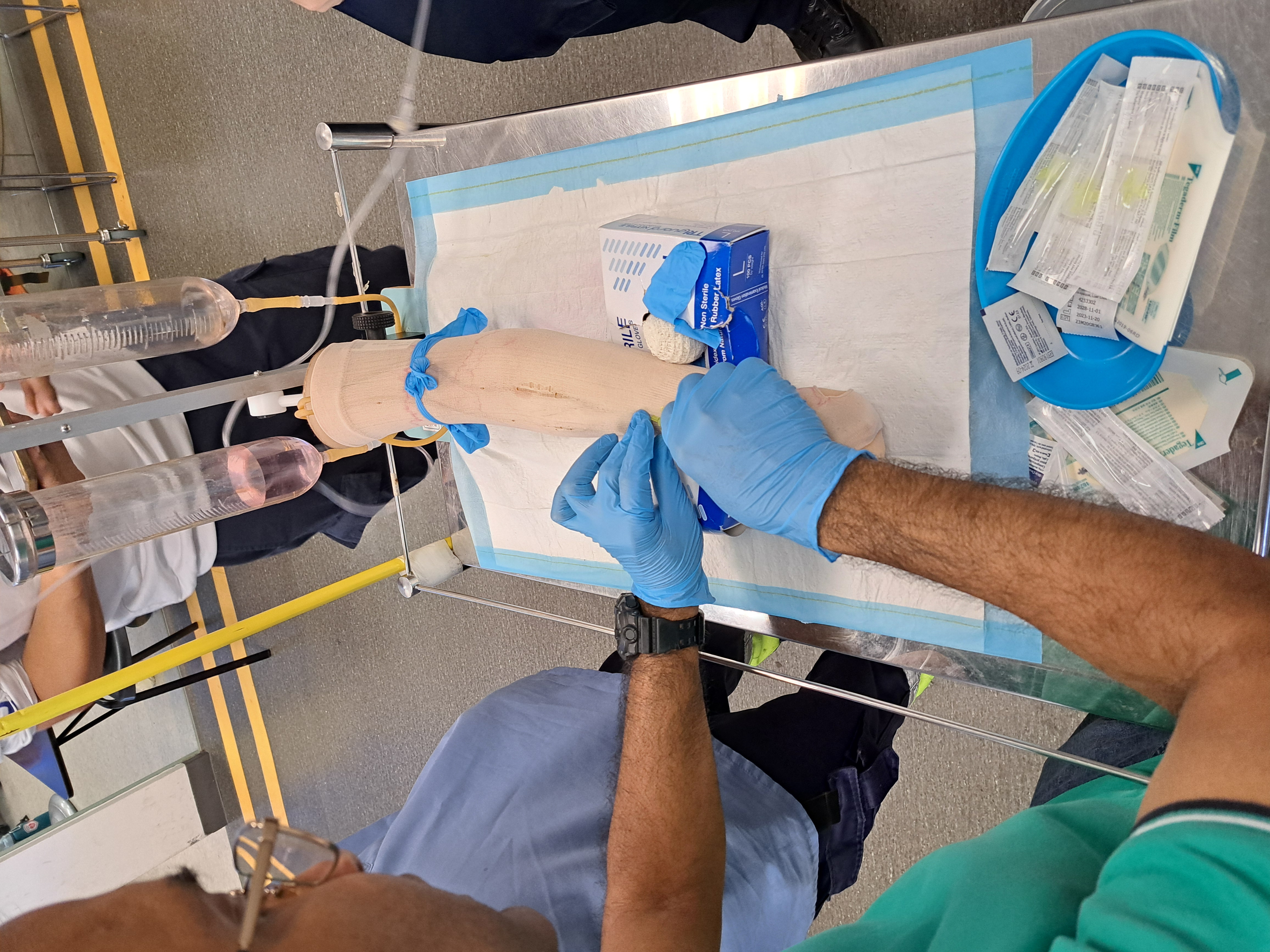
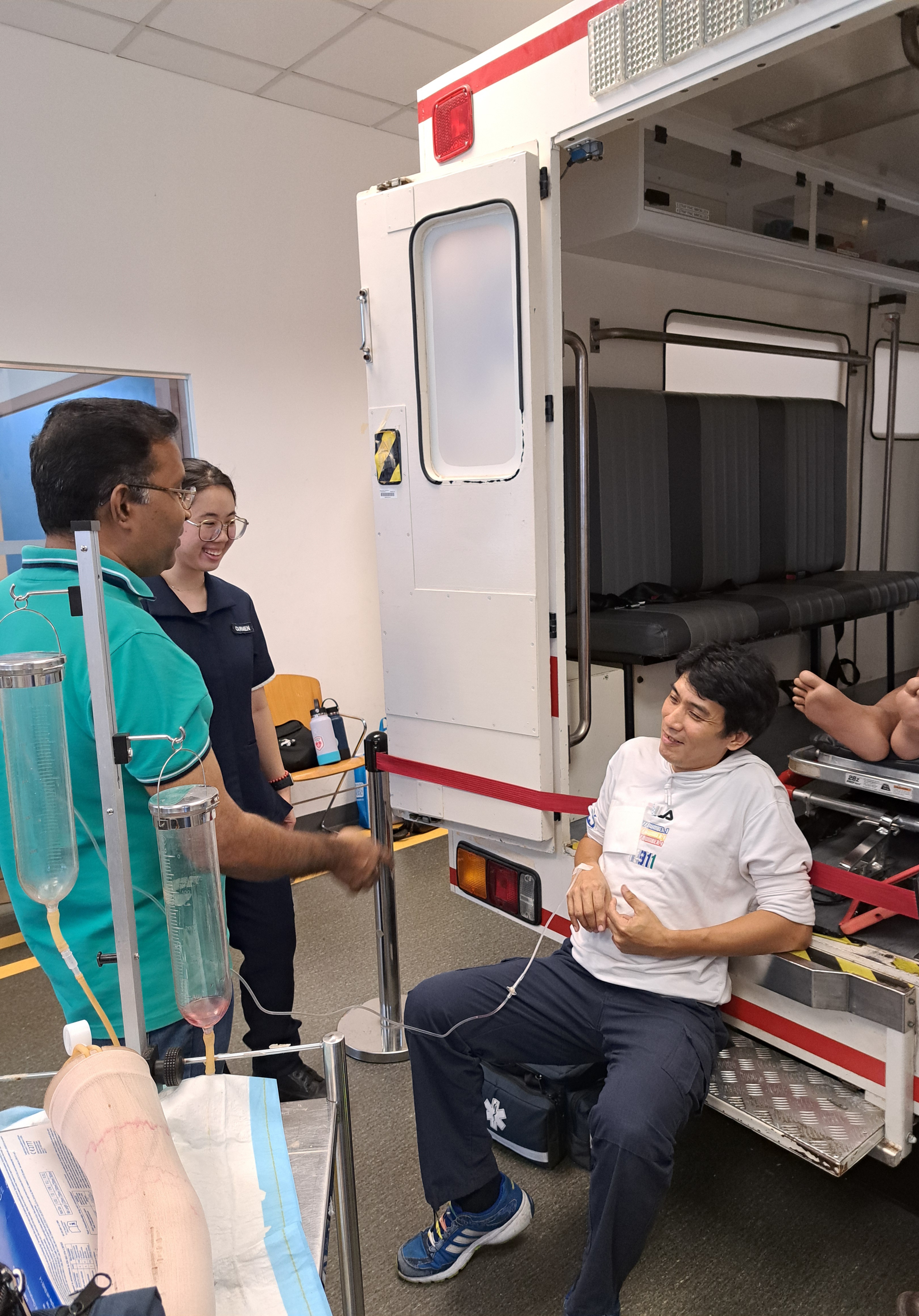
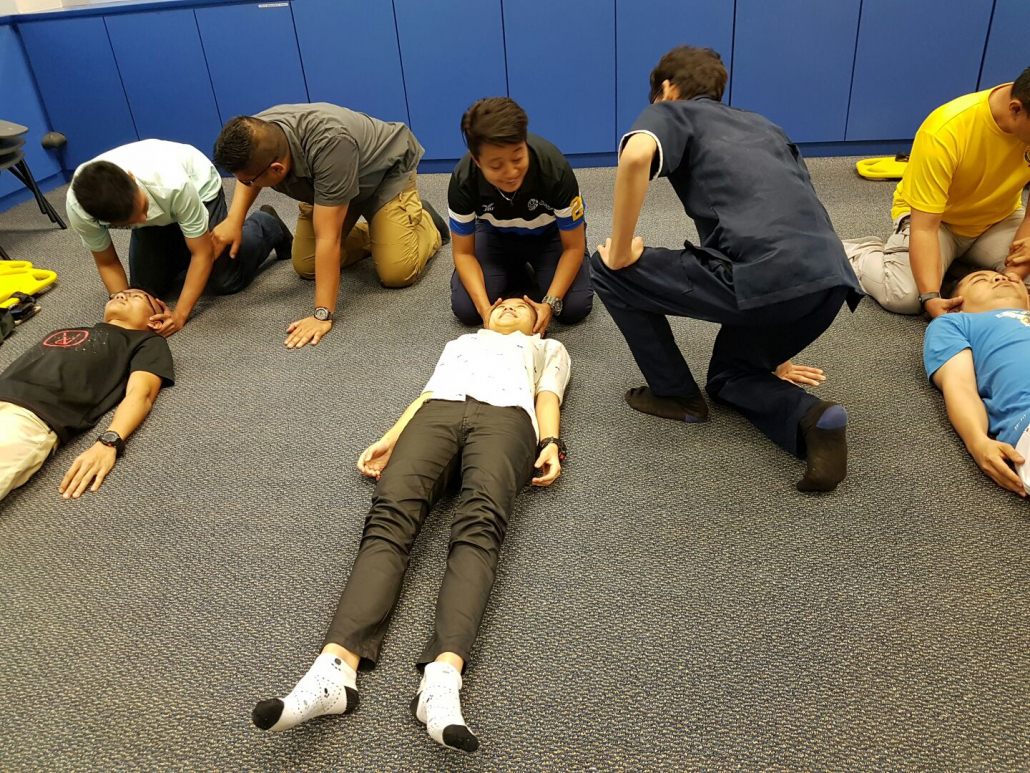
National Pre-hospital Emergency Care Workshop
The next National Pre-hospital Emergency Care Workshop will be held on 16 June 2025.
This workshop is designed for practising pre-hospital care practitioners. It will focus on updates to the assessment model aligned with the latest edition of Emergency Care in the Streets (9th ed.).
Participants will have the opportunity to refresh and enhance their assessment knowledge and clinical skills through a series of lectures and hands-on skill stations.
Lecture 1: Scene Appreciation and Primary Survey
This session highlights the importance of scene safety and its influence on patient presentation. It also introduces the updated approach to the Primary Survey, emphasising the ABCDE framework recommended in the latest paramedic textbook.
Lecture 2: History Taking and Secondary Assessment
Participants will learn to conduct comprehensive history taking using the mnemonics SAMPLE and LOTARPS, paired with physical assessments. The lecture reinforces the interpretation of vital signs in conjunction with clinical findings and history, and emphasises the importance of continuous reassessment.
Lecture 3: Handover and Documentation
This lecture focuses on structured patient handovers to hospital staff using the IMIST-AMBO mnemonic. It also covers key principles of proper documentation and how clinical information should be accurately recorded.
Skill Station 1: Scene Appreciation and Primary Survey
Participants will practise scene assessment and primary survey techniques under the guidance of experienced facilitators.
Skill Station 2: History Taking and Secondary Assessment
This station provides hands-on practice for patient history taking and physical assessment, accompanied by facilitator feedback.
To register, please visit: https://form.gov.sg/6826e59c810acfbebcb5e373
Registration closes on 30 May 2025.
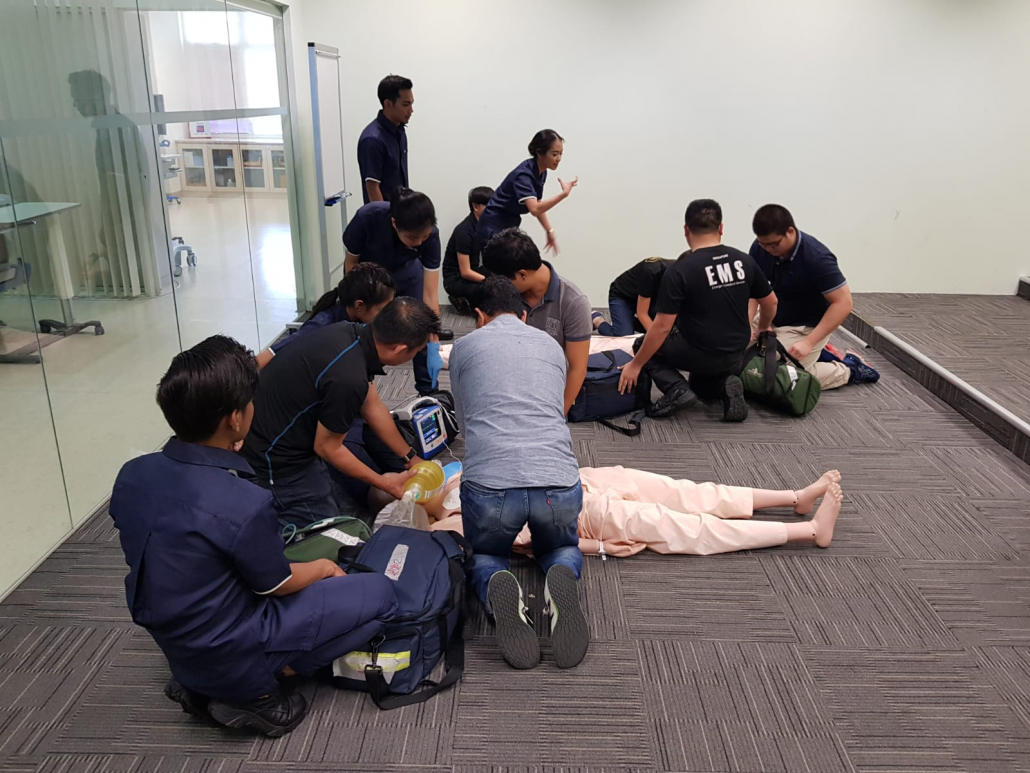
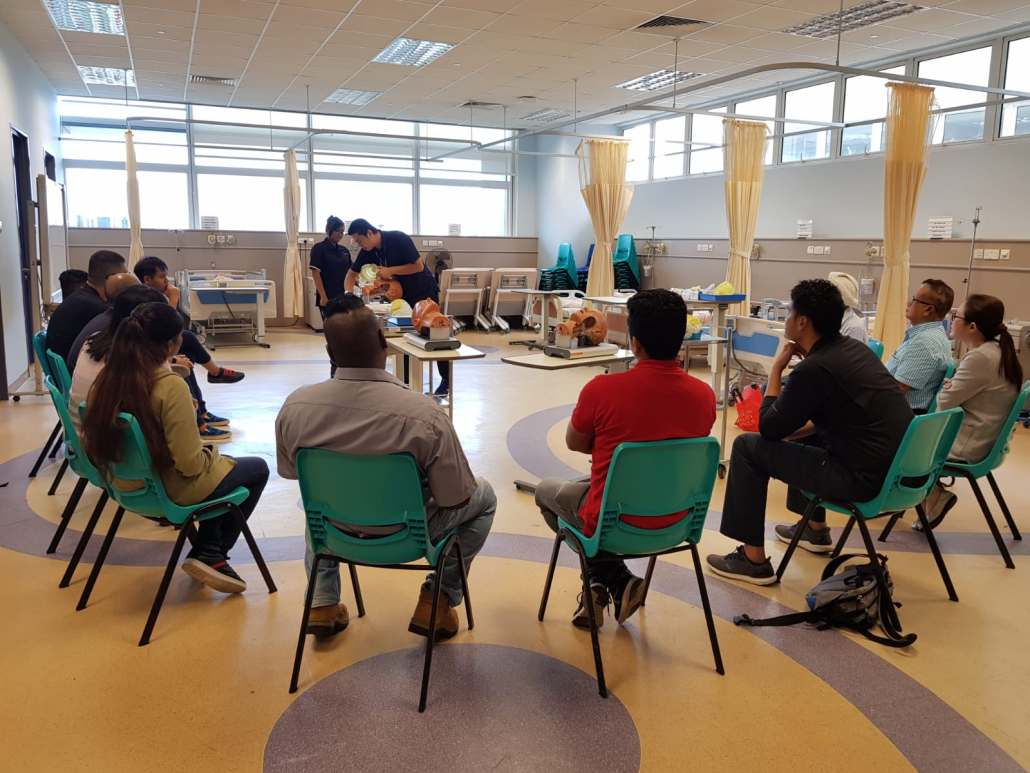
Resuscitation Academy High Performance CPR Workshop
The High Performance CPR (HPCPR) workshop aims to optimise CPR delivery and improve survival rate for Out-of-Hospital Cardiac Arrest (OHCA). This workshop equips EMS educators and healthcare professionals with evidence-based resuscitation techniques while emphasising the science behind CPR and the importance of data-driven performance improvement.